Across Africa, AI has transformed what a weather forecast can do. TomorrowNow’s Chief Agriculture Data Scientist explains what it takes to carry that science the final step — from a forecast to a planting decision a farmer can trust.
By Dr. Hilda Manzi, Chief Agriculture Data Scientist, TomorrowNow
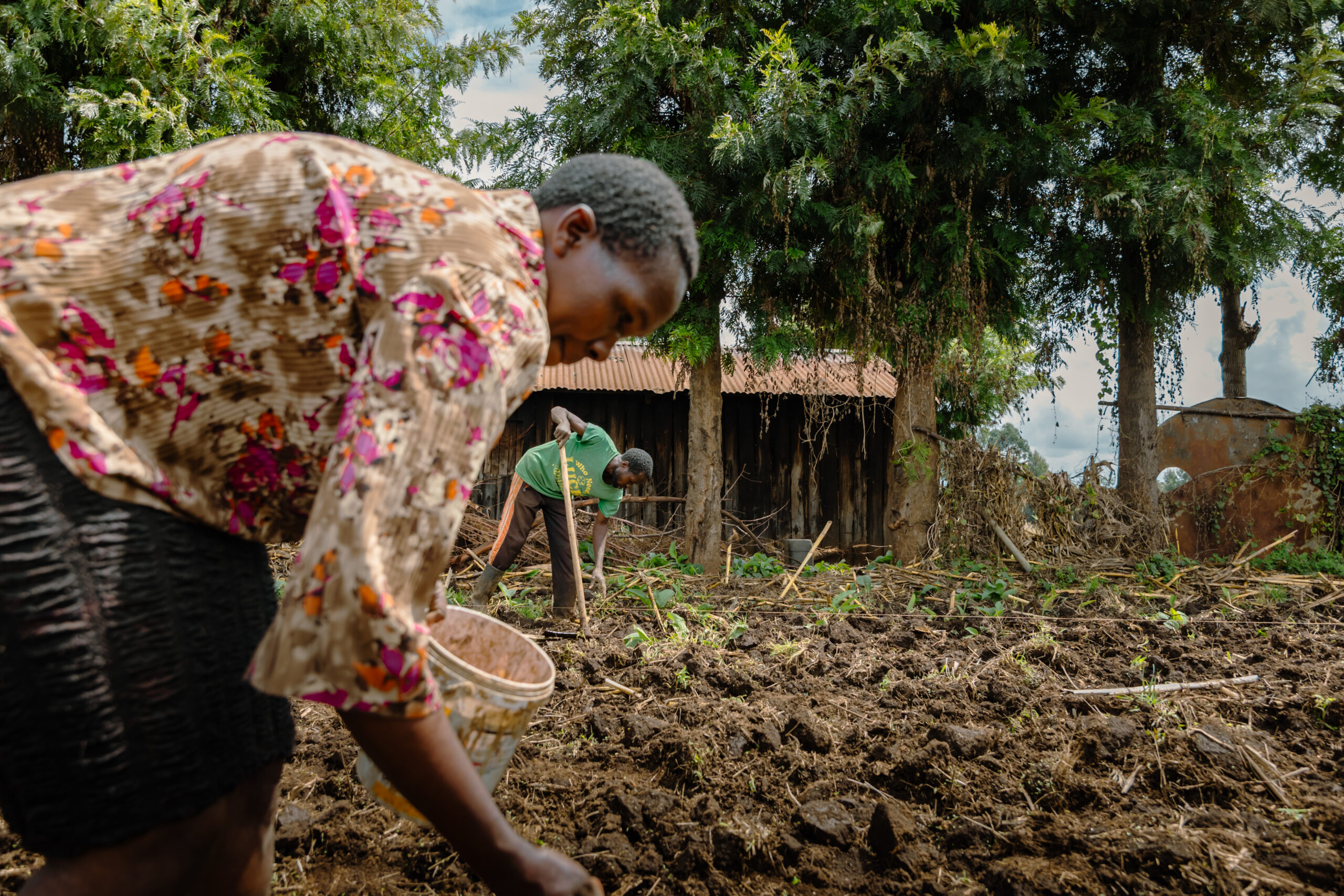
Across Africa, farming has become a problem of timing. A smallholder farmer deciding when to plant, when to apply fertilizer, or when to wait is making a high-stakes bet — and the conditions that bet depends on no longer behave the way they used to. Plant too early and seeds fail to germinate; plant too late and the crop misses the rain it needs to mature. In a stable climate, the calendar a family had farmed for generations was a dependable guide. It is not anymore.
As climate change accelerates, the rains are becoming more erratic and the swings more severe, and getting the timing wrong is costly: across eight African countries, planting and yield data from more than 80,000 One Acre Fund farmers show that planting just two weeks off the optimal date can cost 10–20% of a harvest (source: One Acre Fund, 2025).
From forecast to decision
For most of my career, the assumption has been that the way to help farmers manage this is to give them a better forecast. I have come to see it differently. The forecast matters enormously — but while a forecast provides the foundation to a decision, they are not the same thing.
Take a maize farmer choosing whether to plant on credit. A regional “70% chance of rain over the next seven days” message is built for a meteorologist and it answers the wrong question for the farmer. What she needs to know is whether that rain will establish a healthy crop or set off a false start followed by a damaging dry spell (something that is happening increasingly often as climate change intensifies) — and what to do about it this week.
Turning weather into that kind of guidance means reading it against crop growth stages, soil conditions, and local practice, then converting it into something she can act on, for example: “good rain forecast for planted seeds, monitor for uniform germination, expect emergence in five to seven days.” Describing the weather only takes us part of the way there; guiding the decision that follows is what drives all the value and is where we put our effort.
The evidence bears this out: in a 60 Decibels independent evaluation of more than 1,000 farmers, 72% of those receiving our decision-ready advisories described their season as much better, against 52% of a comparison group who received only a standard agronomic forecast advisory.
The science we build on, together with Google
The forecast underpinning that decision has taken an extraordinary leap. Through our partnership with Google, we draw on Google DeepMind’s WeatherNext models, specifically the probabilistic models, which produce highly detailed and easily accessible forecasts two weeks in advance, at a level of skill that was simply not achievable a few years ago, especially for data sparse regions.
This is the breakthrough that makes everything downstream possible: the better the forecast, the better the decision we can put in a farmer’s hands. Our work begins where Google’s forecast lands, carrying that frontier science the final step — from a precise prediction to a planting decision a farmer can trust. The two are inseparable links in the same chain, and our improved Suitable Planting Window tool is what that chain looks like in practice.
Proof in a farmer's hands
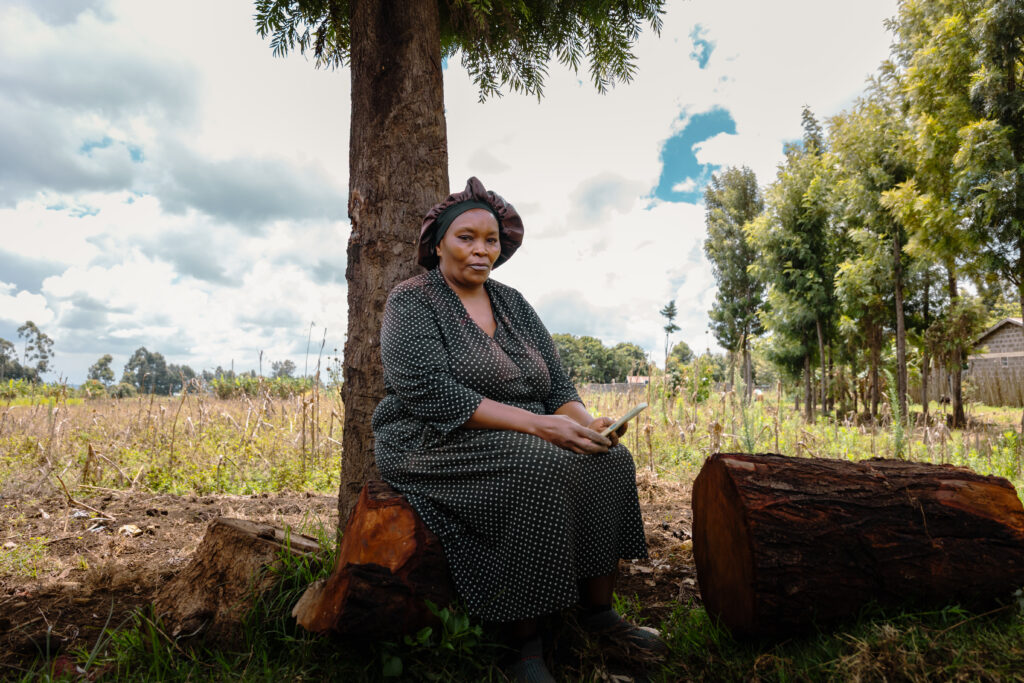
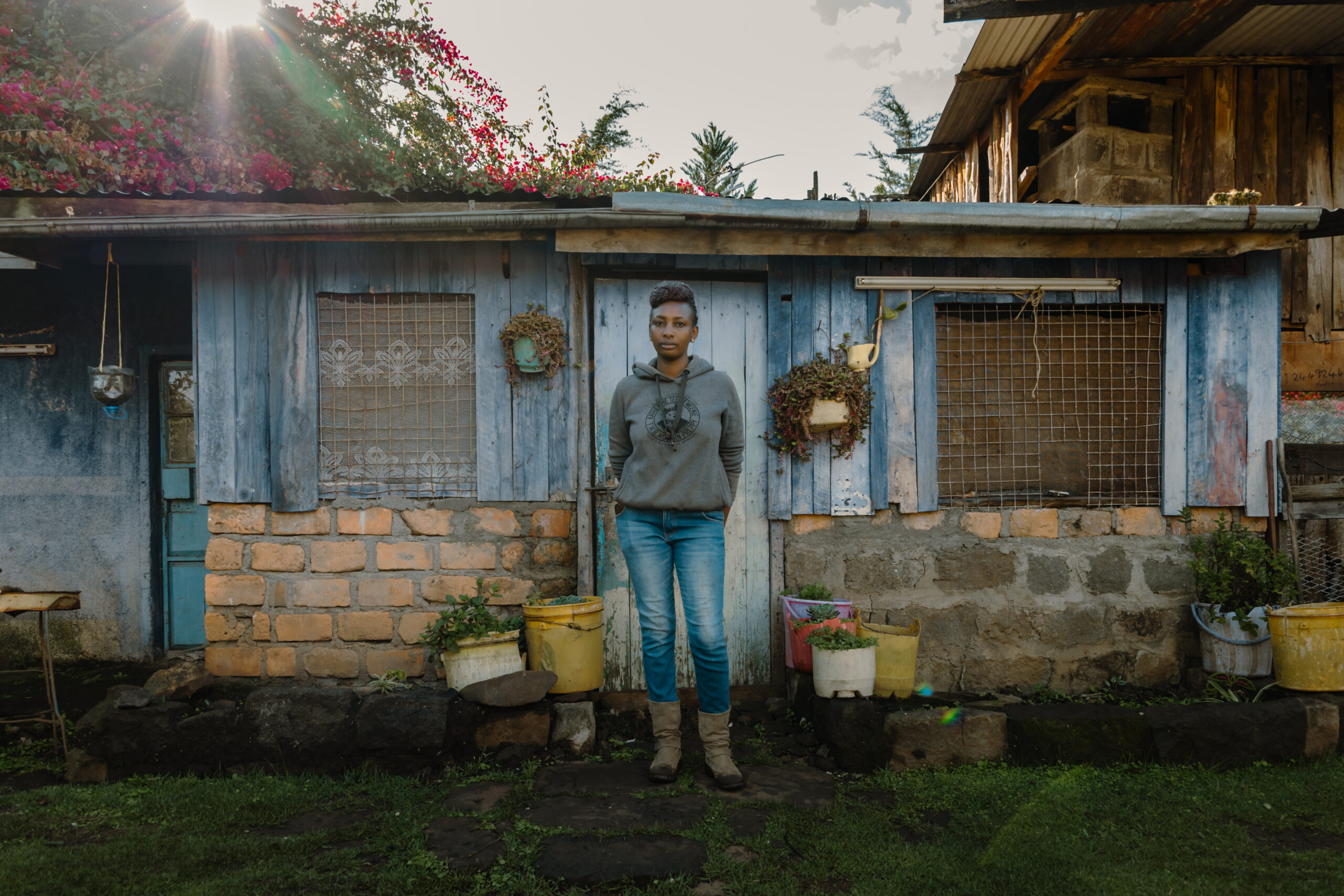
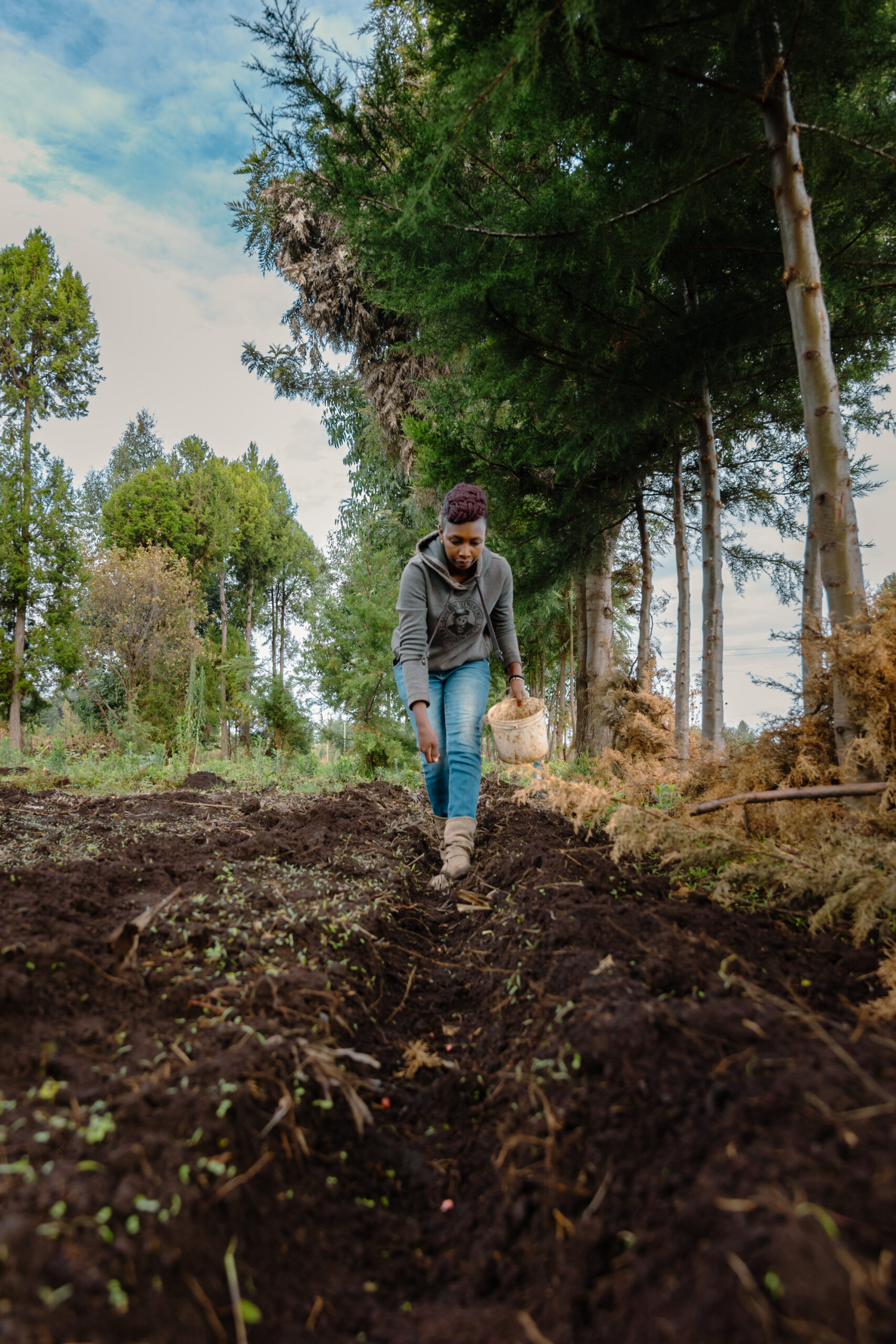
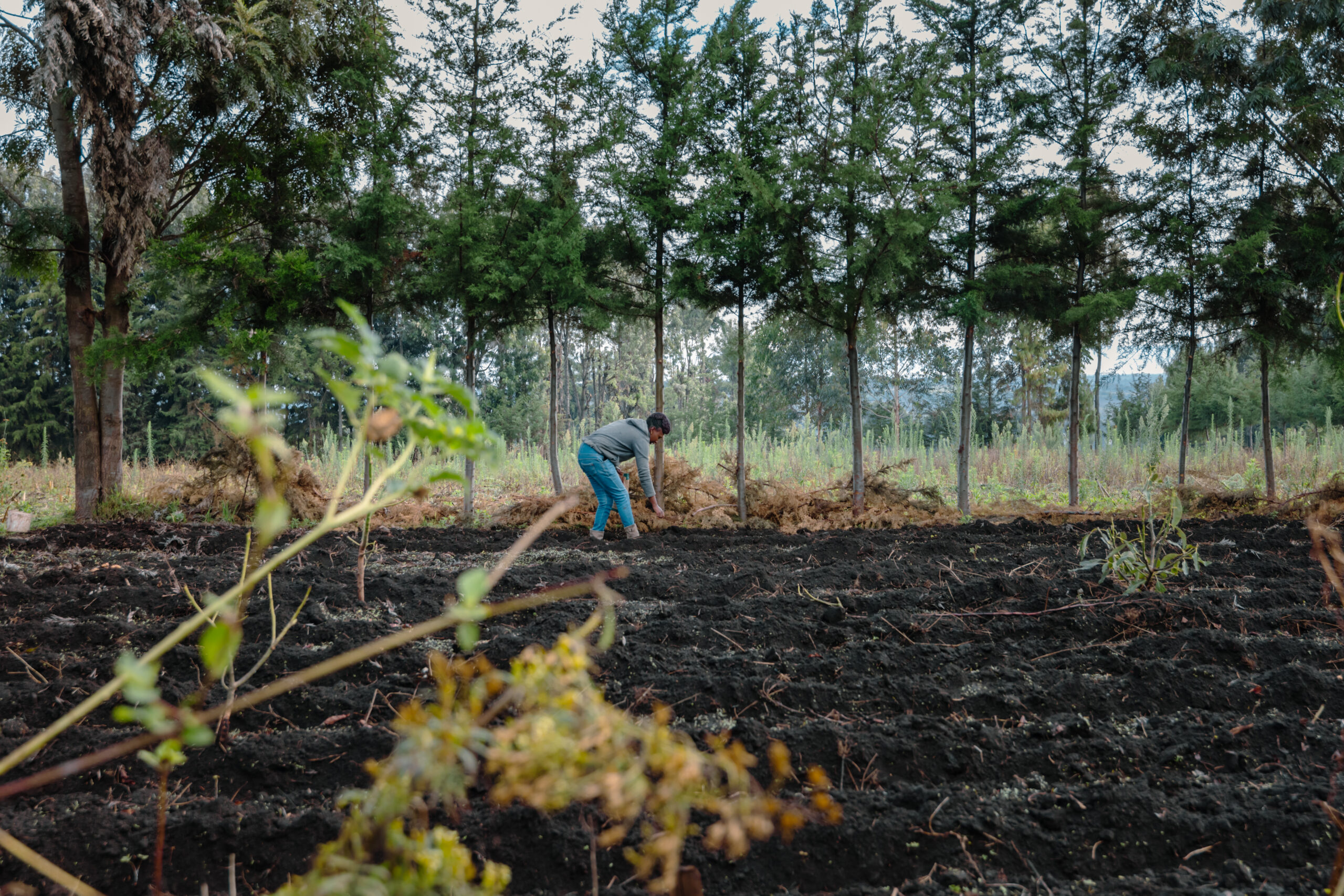
This season, that chain reached Veronica Mukami, a 31-year-old farmer in Njoro, Kenya. In six years of farming, she has watched the rains grow less predictable, and for most of that time she planted on her own read of the weather, never entirely sure whether early rains would hold; in the seasons she misjudged, her harvest suffered.
This year, however, she received a message on her phone: “You can plant now, the rain is coming.” The next day she planted her maize.
Behind that single, plain-language message sits the full chain of technology I have described: WeatherNext generates the ensemble forecast; TomorrowNow’s Global Access Platform interprets it against Veronica’s location, crop, and season and turns it into a planting decision; and our delivery partner, Regen Organics, puts it in her hands, in her own language, localized down to the village level.
The latest version of Suitable Planting Window is one of the first real-world deployments of Google’s next-generation weather technology, reaching a smallholder farmer as a decision rather than a data point.
It is live now — Veronica planted on that message rather than on guesswork. Her maize germinated well and is growing in step with the rains; the harvest will tell the rest of the story later this year.
“At Google DeepMind, we want to ensure our AI models, like WeatherNext, create real-world impact where it is needed most. Our collaboration with TomorrowNow turns our WeatherNext models into decision-support that helps smallholder farmers to make usable planting decisions that can hopefully will change lives.”
Anna Koivuniemi, Head of the Google DeepMind Impact Accelerator
Validation: the part nobody celebrates
A frontier forecast is only worth as much as its accuracy in the exact place a farmer is standing, and that is harder to guarantee across East and Southern Africa than almost anywhere, because ground observations are sparse. It matters even more with AI-driven models, whose performance has to be tested against the highly variable conditions farmers actually face rather than assumed.
Through our Gold Standard Validation Network — a growing set of high-quality ground weather stations across the region — we continuously check how well forecasts hold up against what farmers experience in their fields. Where a model falls short in a particular agro-ecological setting, we refine it; where it performs, we build on it.
That loop, running constantly between advanced forecasting, ground truth, and farmer feedback, is what allows subsistence farmers to trust an AI model enough to commit her season to it.
The system is the innovation
The strongest decision-making intermediaries in smallholder agriculture are rarely apps. They are extension officers, agrodealers, radio agronomists, and the national institutions and farmer-facing organizations that farmers already know and trust. Here in Kenya that includes the Kenya Agricultural Research and Livestock Organization (KARLO), Regen Organics, among others.
The role of AI is not to replace them but to make their advice sharper and more local. It is also why I am wary of the pilot as an end in itself. Pilots are designed to produce evidence; durable systems are designed to produce outcomes season after season, and the two are not automatically the same thing.
Too often we ask farmers to adapt to the technology. The more useful question is how to embed better climate intelligence into the systems farmers already rely on, so that it keeps working long after any single project ends.
Where this is really decided
Scaling this is not, at its core, a technology problem. It is a coordination problem across research institutions, governments, companies, and other partners who reach farmers directly.
Google.org’s generous support for TomorrowNow’s work and initiatives, such as Google’s AI Collaborative: Food Security, matters because it funds and convenes exactly that kind of coordination. But I want to be clear about where I think the future of climate resilience will actually be decided. Not by forecasts, however good they become, but by whether a farmer can act on the right information at the moment it counts, through a system she trusts — and whether that system reaches the next farmer, and the millions after her, who need it just as much.