How a new AI-powered planting advisory is helping Kenyan farmers make one of the most consequential decisions of their season with confidence.
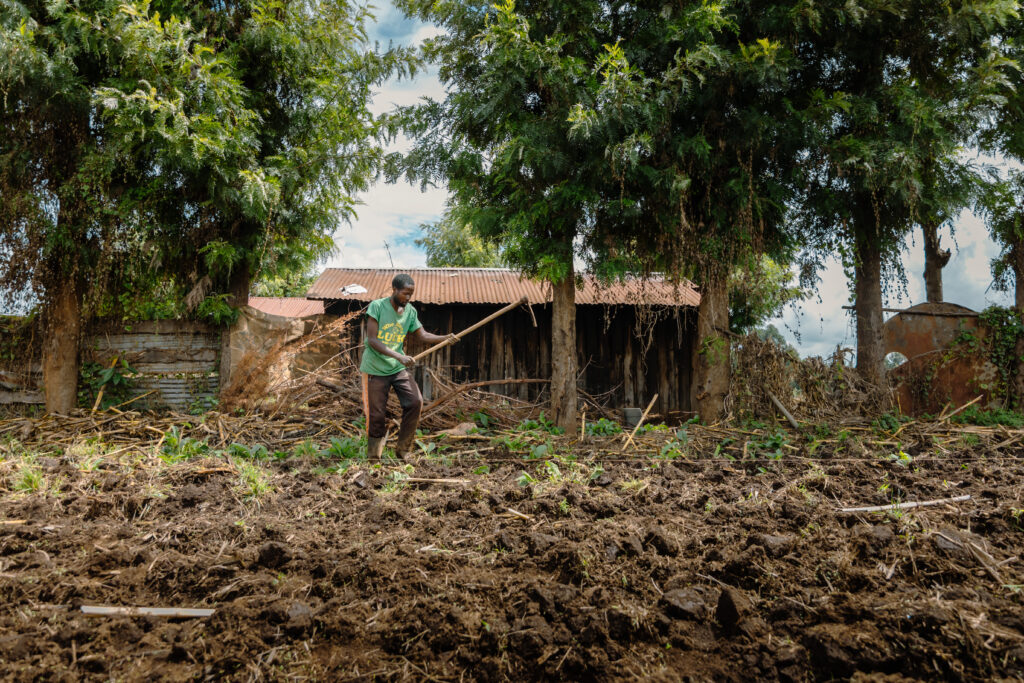
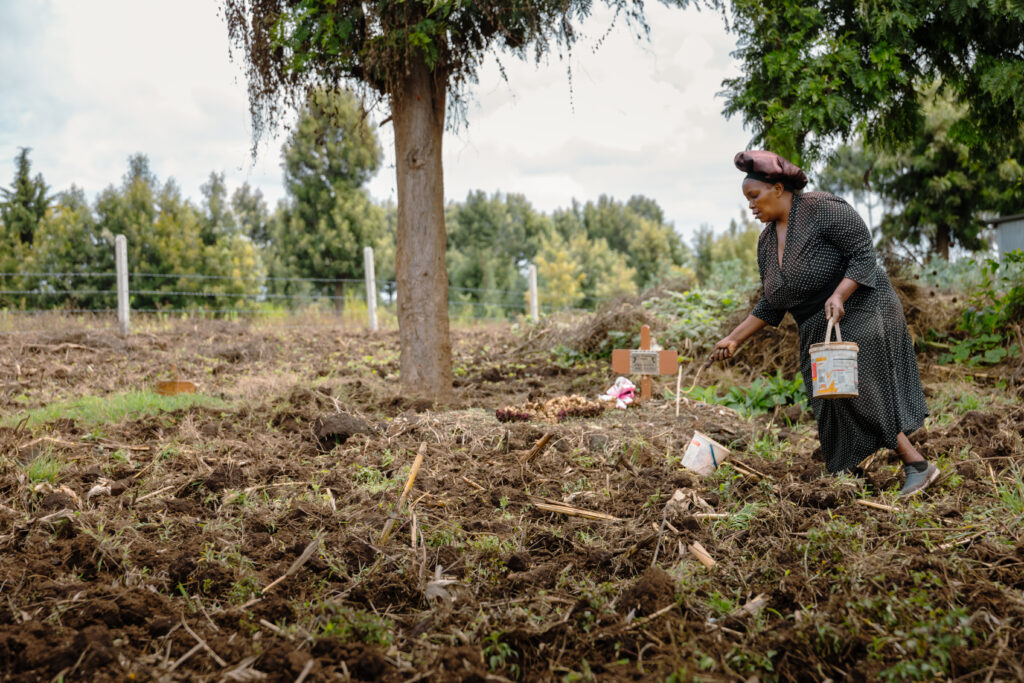
Margaret Ruguru has been farming for as long as she can remember. She farms one and a quarter acres in Njoro, Nakuru County, Kenya — maize, potatoes, beans — and she knows her land well. It’s what her family depends on, year after year.
She used to plant after Good Friday, which falls between late March and late April. It wasn’t guesswork exactly — it was accumulated knowledge, passed down and tested across seasons. But over the past few years, the seasons have shifted.
“I have been farming for many years, and it is true, I have seen the weather patterns changing,” Margaret says. “Now the rain sometimes arrives early. Like now, you see, it has come in March.”
For farmers across Kenya who rely on reading the sky the way their parents taught them, an early arrival raises an uncomfortable question: Is this the rain, or a false start? Getting that question wrong costs you your harvest.
The decision that defines the season
For smallholder farmers across Kenya, the maize-planting decision is not one choice among many. It is the defining choice of the season. Plant too early and your seeds wait in dry soil for moisture that hasn’t arrived. Plant too late and your crop hits its critical growth stage just as the rains taper off. Research drawing on planting and yield data from tens of thousands of Kenyan farmers shows that planting just two weeks off the optimal date can cost 10–20% of a harvest (based on findings from a peer-reviewed study currently under review with the University of Reading). For a family farming on one and a quarter acres, that is not a statistic: the income lost means school fees unpaid and food not on the table.
David Kariuki is a farmer from Laikipia who works with Regen Organics — one of TomorrowNow’s farmer-facing delivery partners — connecting farmers to information and markets. He describes what planting at the wrong time actually looks like in practice: “If you plant early, the harvests are usually good. But if you plant late, the challenges begin — perhaps when the message says harvest, they haven’t matured yet. Then there can be a shortage because they can go to waste by being spoiled.”
For most smallholder farmers without an advisory system, the decision comes down to watching the sky and making a call. “Before,” says John Njugi Karuki, a maize farmer in Kamwago village, Njoro, “it was just guessing like everyone else.”
A different kind of advisory
TomorrowNow’s Suitable Planting Window advisory (SPW) complements standard weather forecasts. It doesn’t tell farmers how many millimeters of rain to expect — it tells them whether now is the right time to plant.
The distinction matters enormously.
David explains it precisely: “The ‘plant now’ message is special. Other weather updates usually just say there will be a certain amount of millimeters of rain, but they don’t tell you it’s time to plant. But this one from Regen Organics tells us exactly when to plant. So, when a farmer plants, they know they aren’t missing the planting window and are right on time. It gives them confidence.”
The advisory leverages Google’s GenCast — a frontier AI weather model that generates 50 possible futures for a specific location and calculates the probability that enough rain will fall to support germination. Those forecasts are continuously validated against TomorrowNow’s ground station network across the region. The result is not a forecast. It is a decision: plant now, or wait.
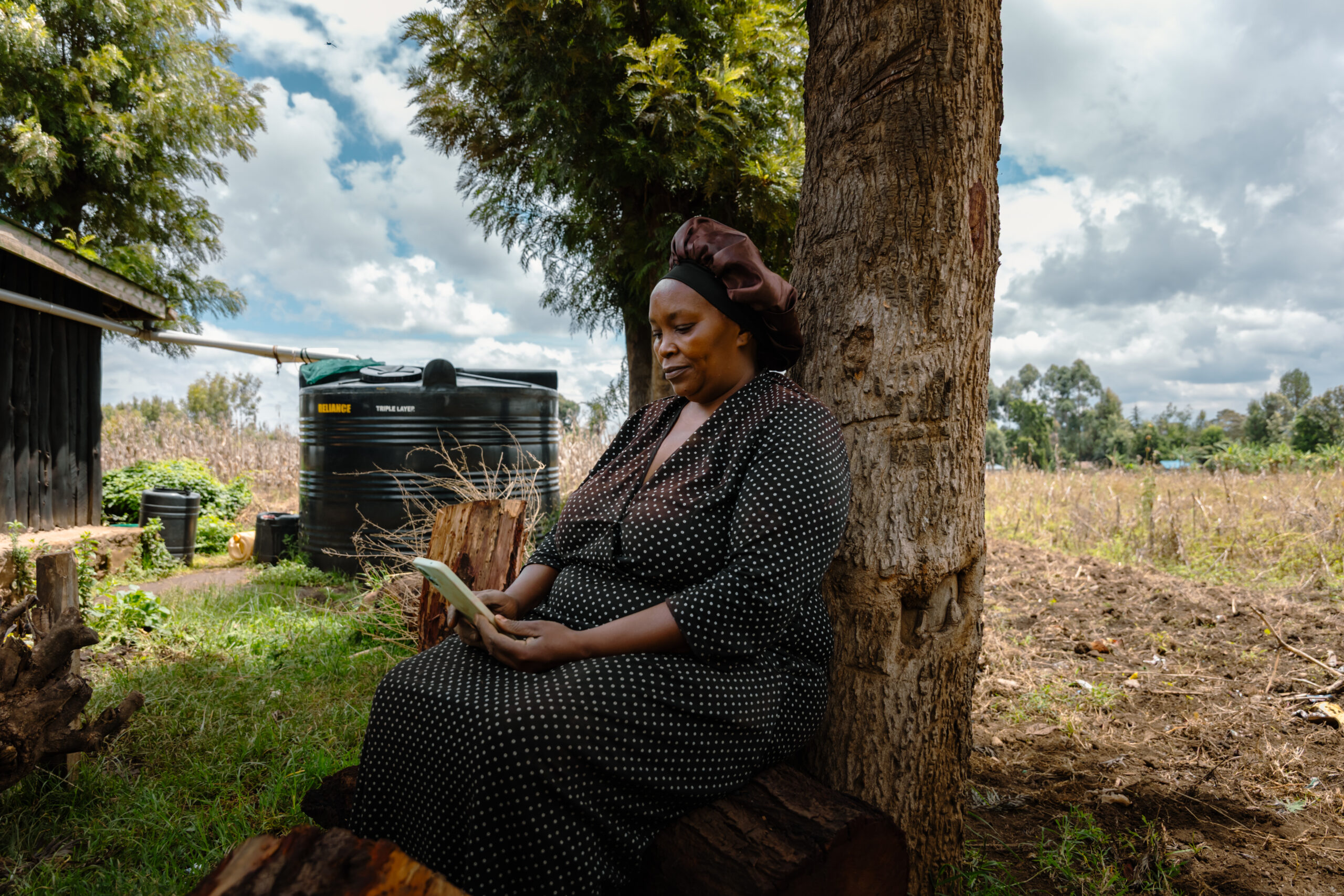
That decision arrives by SMS or voice call, in Kiswahili, to a phone that doesn’t need to be a smartphone. And because the system is localized to the village level, it speaks directly to where a farmer actually is. “When Regen Organics sends messages to farmers, they are localized,” David says. “It tells you about the specific area you are from. Here, it doesn’t say ‘Njoro farmer’ — it says ‘Kamwago farmer.’ We find that very good. Very, very good.”
In analytical evaluation against approximately one million KALRO farmer planting records, Suitable Planting Window onset predictions show a 58% reduction in mean absolute error compared with the previous version of the model. The same dataset reveals something else: female farmers are statistically more likely to plant late than male farmers — 46.9% versus 42.8% — meaning the farmers who most need a reliable planting signal are disproportionately women. At the national scale, that gap translates into tens of thousands of women farmers making higher-risk planting decisions each season, often with less margin for financial loss if the rains fail (based on findings from a peer-reviewed study currently under review with the University of Reading).
Monday's message, Tuesday's planting
Veronica Mukami is thirty-one years old. She farms four and a half acres in Njoro, Kenya — maize, potatoes, peas, beans — and has been receiving the weather advisories for two seasons. When the March, April, May season for 2026 opened and the rains arrived early, Veronica received a message on Monday.
“The message I received on Monday said, ‘You can plant now, the rain is coming,'” she says. “So I decided to plant because most of the messages are accurate. The information they give us is accurate.”
She planted her maize on Tuesday.
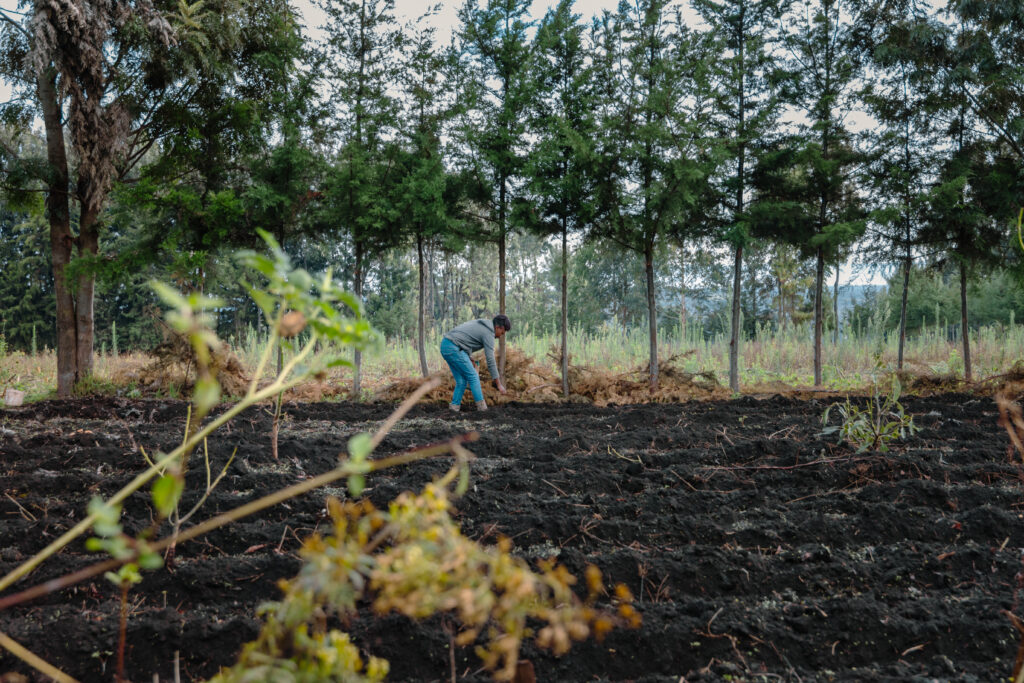
Like many Regen Organics farmers spread across 15 Kenyan counties and six agro-ecological regions — from the Nakuru highlands and Mt Kenya slopes, through pastoral Kajiado and Laikipia, to Eastern Makueni, Machakos, and the Coast — she planted this season based on a recommended planting window. This season’s early arrival was exactly the kind of test the advisory was built for.
“With the information, now that the rain came early, the information was very useful,” Veronica says, “because if I were to do it on my own, I would think, ‘ah, this rain will just come for a little time, then it goes away.’ But they said the rain would continue, so the information was very useful.”
For Margaret, the trust came from watching the system prove itself against the evidence she could see with her own eyes. “I trusted the message because I also saw that the weather had changed, and it was true that there was moisture even in the soil. I saw it was truly the ideal time to plant because the field was already showing me it was ready. And the rain is continuing to fall. When it’s said it will rain — when the message says it will rain — it rains on time.”
"The message I received on Monday said, 'You can plant now, the rain is coming.' So I decided to plant because most of the messages are accurate. The information they give us is accurate."
Veronica Mukami, Smallholder Farmer, Njoro, Kenya
The system behind the message
The technology is invisible to the farmer. What Veronica, David, Margaret, and John see is their trusted Regen Organics field network giving them better advice than before. That is by design.
TomorrowNow doesn’t go directly to farmers. Instead, we build and validates the agro-met intelligence, packages it into decision-ready advisories, which are delivered through organizations that farmers already trust. Regen Organics provides organic fertilizer, extension knowledge, and a network of lead farmers — people like David — who translate, explain, and follow up. The Suitable Planting Window advisory builds on an existing relationship.
David describes his role: “I visit the farmers, especially those who receive weather updates, to see the challenges they are facing. I also collect their feedback and share it with Regen Organics so they can make improvements where needed.” And on trust: “Farmers trust both Regen Organics and me because we have been with them for a long time. We have walked this journey together without abandoning them. Therefore, they see us as reliable people because we don’t walk away. We are with them on the ground at all times.”
This is the systems-first model that makes climate adaptation actually work. The intelligence is next-generation, but the delivery is deeply human.
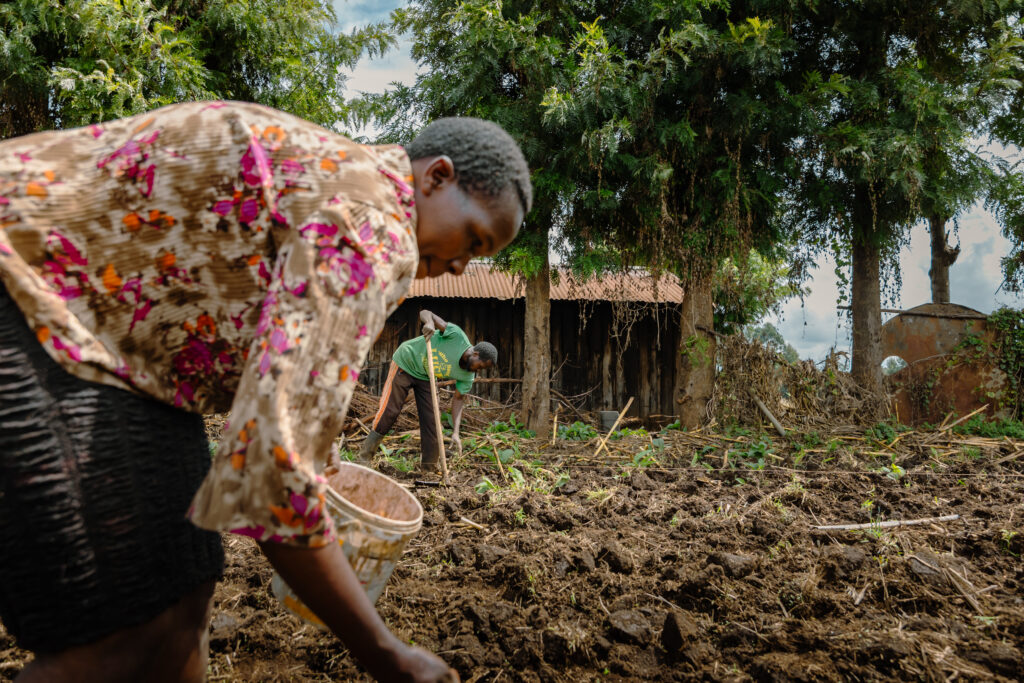
What good looks like
Margaret has a way of describing patience that captures something essential about what it means to farm with better information.
“Just as the Swahili say, ‘a patient person eats ripe fruit,'” she says. “I have seen that being patient is very important. Because if I wait for the message about planting, and I am patient until I receive it, when I plant, I see the results, and everything is good.”
What has changed for the farmers using the Suitable Planting Window advisory is not the weather. The weather remains increasingly unpredictable and variable, unlike the patterns their parents farmed by. What has changed is the quality of the decision they can make in the face of that unpredictability.
“I used to rely on guesswork because I didn’t have any way of knowing,” Margaret says. “But now, since I have found another way to know what the weather is like, I am happy because I see it is beneficial to me. I don’t lose seeds, so I don’t waste my money.”
For Veronica, the change has rippled outward from the farm. “With more yield, it has improved my living standards. Because now, I have kids in school, I can pay easily and effortlessly. I am not struggling. Food is plentiful, I can do some extra things with my money. I even leased some more land.”
And for Margaret, facing a climate that keeps shifting — rains in March where April used to be the rule, seasons she barely recognizes from the ones she learned on — the advisory has given her something more fundamental than a good harvest. It has given her the confidence to plan.
“Climate change doesn’t frighten me,” she says. “It just requires you to plan yourself according to how the weather is changing.”
Get in touch
The Suitable Planting Window advisory is live this season for Regen Organics farmers across 15 Kenyan counties and six agro-ecological regions. TomorrowNow’s Digital Climate Advisory Services currently reach over five million Kenyan farmers through the DCAS program — the largest agro-met advisory program in sub-Saharan Africa.
If you work with smallholder farmers and want to offer this kind of decision support, get in touch.
TomorrowNow is a weather-tech non-profit. Suitable Planting Window advisories leverage Google’s GenCast AI ensemble weather model and is delivered through the GAP Agentic AI platform in partnership with Regen Organics.