When people think about AI and digital climate advisory services, they often picture the final moment: a farmer receiving an SMS with advice on when to plant, fertilize, or harvest.
That moment matters. But it’s not where impact begins.
By the time that message reaches a phone, much of the work has already been done. At TomorrowNow, we’ve learned that the difference between advice that is ignored and advice that positively impacts decisions lies upstream, in the systems that make climate information trustworthy in the first place.
Beyond “more data”
There is no shortage of weather and climate data. Satellites, global forecasting models, and automated systems generate enormous volumes of information every day. But much of this data is not designed for Africa’s agricultural realities — it is produced at global or continental scales, with limited ground observation points and without the localization needed for rain-fed smallholder farming.
The result is a familiar paradox: more data globally, but less usable insight locally.
Raw forecasts are often produced at scales that don’t reflect local conditions. They can be inconsistent, difficult to interpret, or disconnected from the realities of farming calendars and risk. For smallholder farmers in Africa, acting on unreliable information carries serious consequences. A mistimed planting decision can mean losing seeds, labor, and an entire season’s income.
This is why at TomorrowNow, we don’t measure impact by how much data exists, but whether it helps farmers make better decisions.
Where trust is built: the first mile
Before any advisory or forecast reaches a farmer, it goes through research, testing, and refinement. This is the largely unseen work that determines whether climate advice is credible enough to act on.
This includes combining multiple sources of climate, weather, and agro-meteorological intelligence; correcting biases in global models using historical and observed conditions; and localizing outputs to the scale at which smallholder farmers actually make decisions. Crucially, this work is done in close collaboration with African national meteorological agencies, agricultural research institutions, and government partners.
TomorrowNow’s Global Access Platform is designed to do more than pass forecasts downstream. It continuously validates predictions across seasons, translates uncertainty into clear decision windows, and aligns advisories with local cropping calendars and risk thresholds — a process that allows farmers to plan, not just react.
This is where trust begins, not with a message, but with the system behind it.
Translation is not simplification — it is design
Even accurate forecasts can fail if they are not translated into guidance that reflects how smallholder farmers plan and manage risk.
In order to achieve this, we use a deliberate design process. Climate intelligence is shaped into localized, time-bound recommendations that reflect both scientific uncertainty and real-world constraints. Feedback from farmers themselves, partners, and researchers is continuously fed back into the system, refining how advice is generated and delivered over time.
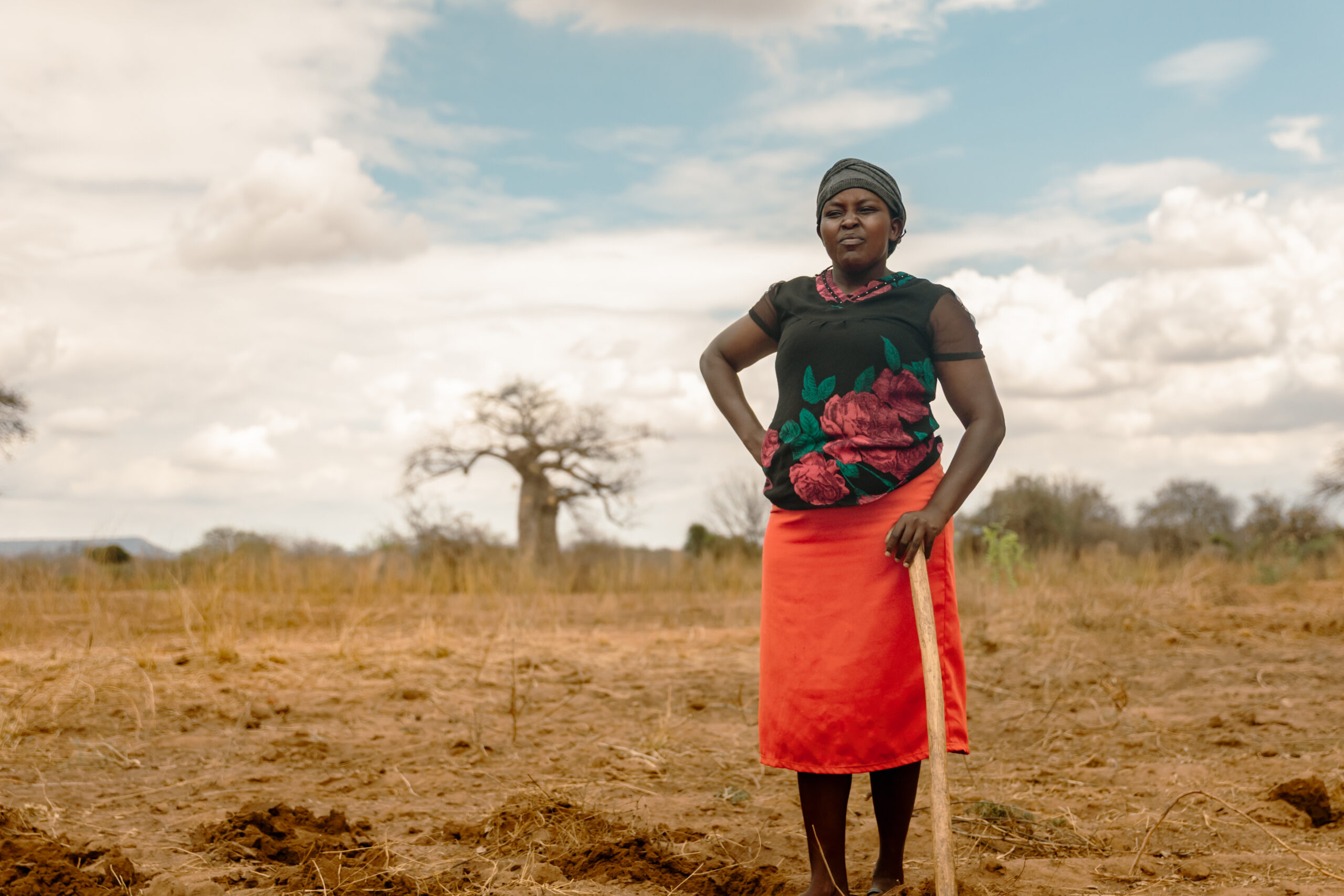
For example, during field discussions in Kenya, farmers shared that unpredictable rainfall patterns made it difficult to know whether to plant during the first short rains — a period that was historically reliable. In response, TomorrowNow and partners introduced a planting-window advisory that distinguishes between actual rainy season onset and false starts, helping farmers decide when to wait and when to plant. This feature was co-shaped by farmer feedback and agronomic validation.
The result is not generic weather information, but decision-ready guidance grounded in local reality.
From forecasts to decisions: Michael Kisangau’s story
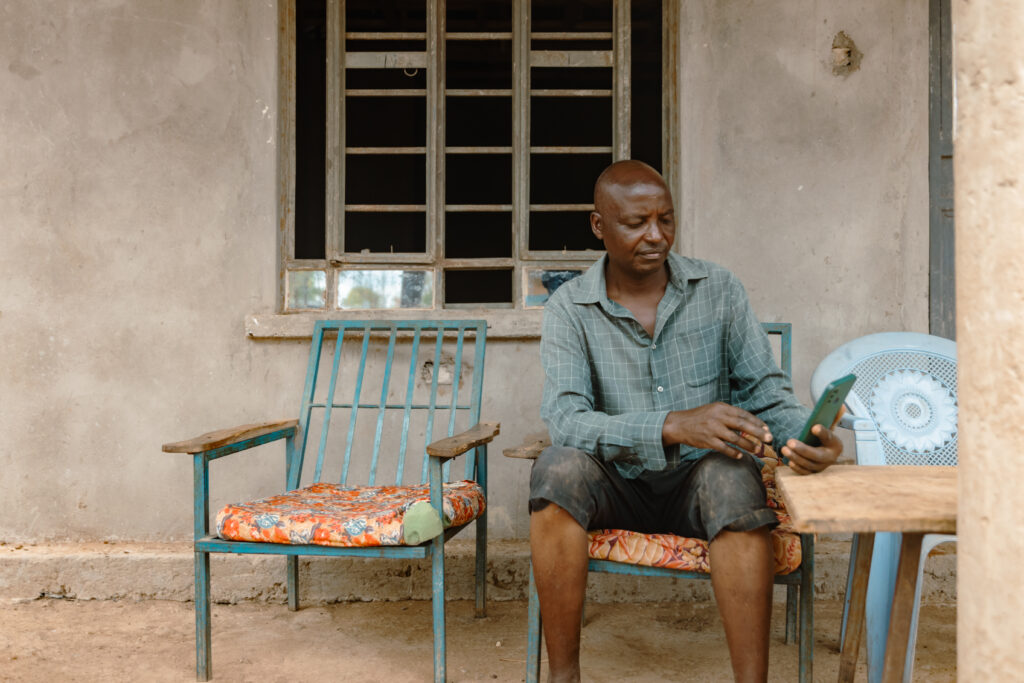
Michael farms in Kibwezi, Kenya, where planting decisions were once guided primarily by experience, observation, and tradition. As rainfall patterns became more unpredictable, those signals grew less reliable. Knowing when to plant became a gamble, and losses became more frequent.
When Michael began receiving TomorrowNow’s localized advisories, the shift was not about understanding climate models or artificial intelligence. It was about confidence. Instead of guessing when the rains would come, he could align planting with credible information about rainfall onset and pauses.
That shift — from hoping and reacting to planning with evidence — changed how Michael managed risk across the season. His experience illustrates a critical point: farmers do not necessarily need to understand how climate systems are built. They need advice that reflects reality closely enough to trust with their livelihoods.
The messages I received said that there would be little rainfall and that I should prepare my farm. I began to do so. I added fertilizer and dug holes to get a harvest. These messages have been very helpful.
Michael Kisangau, Kibwezi, Kenya
Michael’s story is part of a broader pattern.
Across multiple Kenyan farming communities and seasons, farmers using TomorrowNow’s localized weather advisories reported tangible improvements in outcomes. According to a 2025 analysis conducted with one of our partners, maize yields among participating farmers increased by an average of 12% compared to previous seasons without tailored guidance.
For smallholder farmers, this difference is profound. A 12% yield gain means improved food security, higher household income, and greater resilience to climate shocks. These results reinforce a core insight: the quality of upstream systems directly shapes downstream impact.
The SMS is visible. The impact is built earlier.
Rethinking how we define success
Trust is not created by a single accurate message. It is earned over time, through consistency — when advice aligns with what farmers observe in their fields, helps them avoid losses as well as pursue gains, and reflects the realities of their environment rather than abstract averages.
That consistency is the product of first-mile investment: in data validation, localization, partnership, and system design.
Too often, climate services are evaluated only by ‘last-mile’ metrics: how many messages were sent, how many users were reached. Those numbers matter, but they tell only part of the story.
For governments investing in agricultural resilience, funders supporting climate adaptation, and partners building forecasting technologies, the more meaningful question is whether advisory systems reduce uncertainty enough to support real decisions.
At TomorrowNow, we believe impact is not created at the moment of delivery. It is built in every calibration, every collaboration, and every decision to prioritize trust even as we scale. When climate advice is trustworthy, farmers can move from guessing to planning. And when planning replaces guesswork, resilience becomes possible. Learn more about our programs here.