This year, TomorrowNow has begun supporting the creation of Digital Climate Advisory Services in Nigeria. Our Regional Program Coordinator explains why the most important part of the work is making sure the system belongs to Nigeria — not to us.
By Ronald Diang’a, Regional Program Coordinator, TomorrowNow
I grew up in a farming community in Kenya, trained as a geologist, and have spent most of my career between science and the farm. These experiences have taught me something I rarely hear said plainly: the success of weather and climate advisory services depends on so much more than the quality of the forecast. Again and again, I saw that the services with the greatest staying power were those embedded within the institutions farmers already relied on. By contrast, approaches delivered as standalone projects or short-term pilots often faced a much harder path to long-term adoption and sustainability.
That lesson has shaped how I think about scaling weather and climate services ever since.
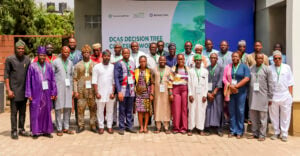
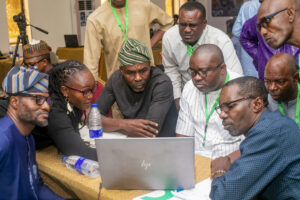
This March, in Abuja, TomorrowNow put that thinking into practice. Over five days, we convened with the Nigerian Meteorological Agency (NiMet), we brought crop breeders, agro-meteorologists, extension officers, Information and Communication Technology (ICT) specialists, telecom partners, and government representatives into one room to design Digital Climate Advisory Services (DCAS) that Nigeria can run, scale, and ultimately own. It marked the start of TomorrowNow’s work in Nigeria, and the clearest test yet of a conviction I have held for years.
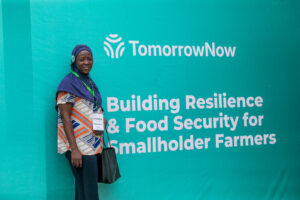
Nigeria is home to roughly 38 million smallholder farmers, who make up around 88% of the country’s farming population, and its agricultural system is among the most complex of anywhere we work, spanning diverse crops and conditions across states including Niger, Kaduna, Taraba, Ogun, Cross River, and Ebonyi. And, for the first time, we are extending DCAS to rice, which to my knowledge has not been done at this level before. The institutional appetite is real: NiMet and the Federal Ministry of Agriculture did not treat this as a pilot; they engaged as core partners who want these services built into national systems from the start.
Dr. Samaila Taiye Tehinse, Director of the Federal Department of Agricultural Extension Services, put it in his own terms:
“With DCAS, we can reach new levels of productivity, and farmers will benefit. As a director, I will be proud that this was achieved while I was in the seat. We have to embrace DCAS, for a better tomorrow and for more secure agricultural production across all our villages. That, I believe, we can achieve.”
The system, not the service
This reflects a principle that has shaped my thinking for years: what we are building is not a “TomorrowNow service.”
“Success depends on whether the approach can be adapted to local realities and embedded within the institutions responsible for delivering it. In that sense, localization is not a communications exercise or a branding choice; it is central to the model itself.”
To scale, we have to work with partners who already hold the mandate, the infrastructure, and the relationships to reach farmers, which in most countries means the government. Governments have the scale; we don’t. So instead of standing up a parallel platform, we embed agro-met intelligence into what already exists, aligning with NiMet’s seasonal outlooks and working with the Federal Department of Extension Services to carry advice through the network that already visits farms. Done well, these programs can be carried by Nigerian institutions without always depending on us, which is the only kind of scale that lasts.
Turning forecasts into trusted, local advice
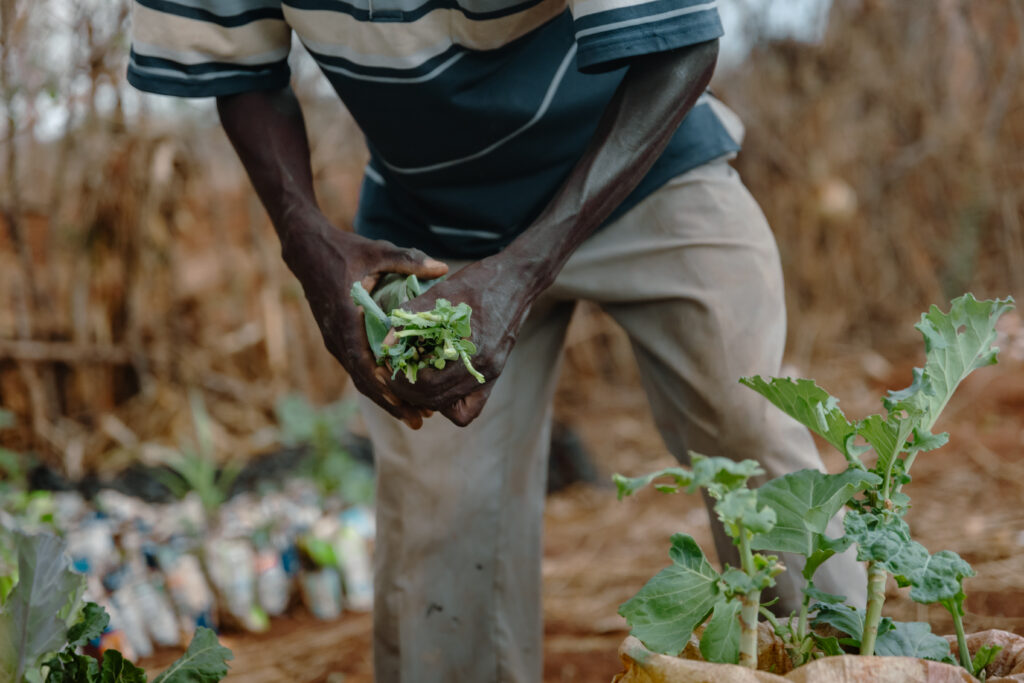
Much of this rests on a plain-sounding tool we built with the team in Abuja: decision trees. Each one captures expert judgment as a rule e.g. if a farmer is in Ogun State, growing maize, and this is the forecast, what would a good Nigerian extension officer standing in her field tell her to do?
We encode that answer, crop by crop and stage by stage, across Nigeria’s priority crops — maize, cassava, and rice — turning forecasts into specific actions: when to plant, when to wait, when to apply fertilizer, how to respond to a dry spell. It lets us replicate trusted advice at a scale no extension service could reach in person.
Dr. Tehinse described what this means on the ground:
“DCAS is an innovation I believe will transform Nigeria’s agriculture. Rainfall can no longer be predicted by assumption; you need digital information. The farmer has to be guided with clear, precise information on how to plant, when to plant and when to expect rain. A well-established digital platform like this removes many of the challenges our farmers face.”
The advice itself is not ours alone. Because the advisories are developed with and co-owned by our partners, they reflect Nigerian agronomic expertise, local delivery systems, and feedback from farmers over time. The messages go out in Hausa, Igbo, and Yoruba, because guidance a farmer cannot read in her own language is not guidance at all.
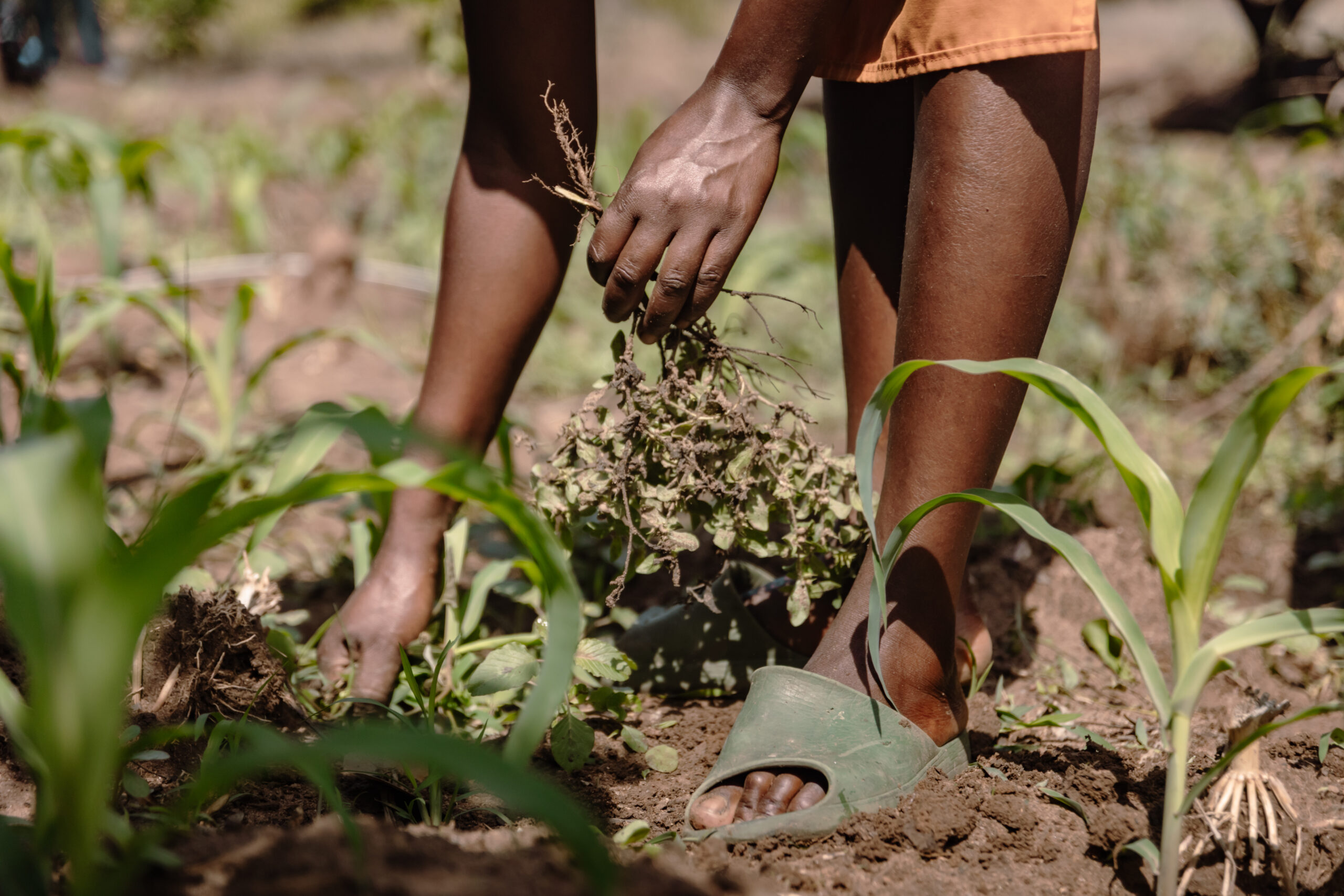
One recent message to maize farmers read: “Little or no rain is expected. Maize plants may wilt. Irrigate if possible or cover soil with dry grass. Remove weeds to reduce competition.”
It is plain and specific, tied to a decision a farmer can make that week, and sharpened season by season by what farmers report back to us.
A model that can pay for itself
Most climate services live and die on short-term donor funding. Here, from day one, we have worked with private partners, Tomorrow.io and the telecom operator MTN, and asked a harder question alongside our public partners: what would make this financially viable for the long term, including whether farmers might eventually choose to pay for a service that reliably improves their outcomes? This is early, and I won’t overstate it, but designing for sustainability at the start, rather than hoping for it later, is a real break from how these programs usually run.
What it actually takes
If I am being direct, building next-generation digital climate advisory services (DCAS) that work in a place like Nigeria comes down to three things, none of them the tech:
- Strategic partnerships with players who can sustain scale and already have farmers’ trust, such as NiMet, MTN, and the Ministry of Agriculture;
- Proper contextualization and localization, led by experts who know the local context; and the part teams most often skip:
- Closing the loop with farmers through dedicated feedback that tells us what is working, so the service keeps improving around how they actually use it.
What Nigeria is really testing
We are not testing whether digital climate advisory services can work in theory. We know they can. The open question, for Nigeria and the continent, is whether they can become trusted, locally owned systems that farmers rely on season after season, long after the launch is forgotten and the first grant is spent. That is the work, and if we get it right, the real measure of success will be the day Nigeria no longer needs us to run it.